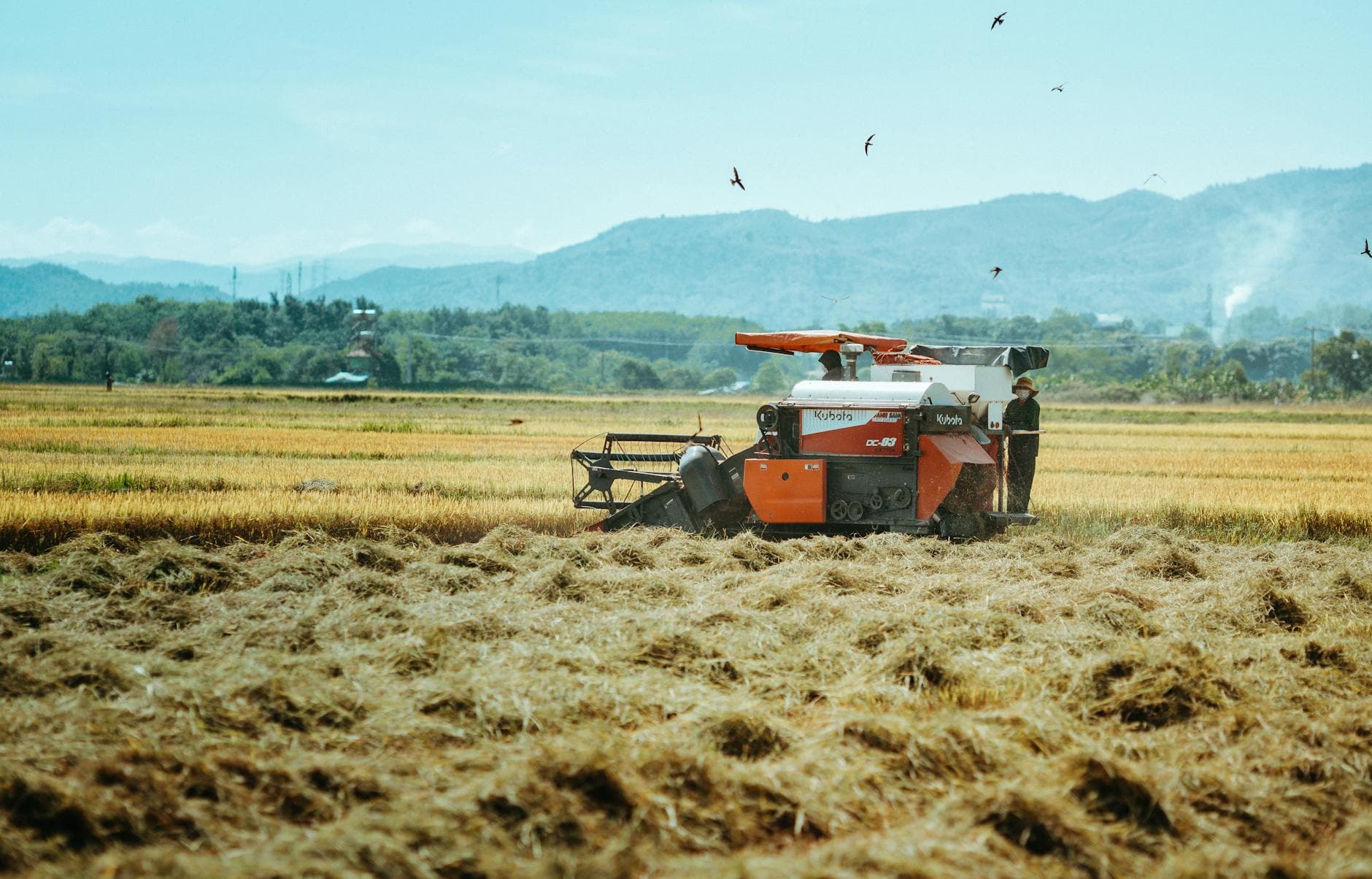
Philippine agriculture has been described as a technology opportunity for decades. The case always sounded good in a pitch: 7.7 million Filipino farmers, mostly smallholds, most without market access, most selling through middlemen who take 40–60% margin. Build a platform that connects them directly to buyers. Sounds straightforward until you try to do it.
We've been trying for 18 months. This is what we learned.
By Diosh Lequiron, PhD, MBA, CSM — President & CEO, HavenWizards 88 Ventures OPC Last updated: May 9, 2026
What Bayanihan Harvest Is
Bayanihan Harvest is a Philippine agritech platform that connects smallhold farmers to buyers — supermarkets, restaurants, food processors, and direct consumers. The platform handles farmer onboarding, crop data management, order matching, fulfillment coordination, and payment processing.
It operates under HavenWizards 88 Ventures OPC as one of our active venture lines. It is not a research project. It processes real orders, serves real farmers, and has generated real revenue.
The product sits at the intersection of two markets with high friction: farmers who need buyers, and buyers who need reliable supply at consistent quality. The middlemen who exist in that gap are not inefficient because they lack technology — they're efficient for the services they provide (transport, aggregation, credit). Replacing them requires replicating those services technologically while adding value that the middleman model can't.
This is harder than any AI pitch deck suggests.
What We Built and How
The Farmer-Facing Infrastructure
Farmer onboarding was the first hard problem. Our initial assumption was that we'd build a mobile app, farmers would download it, and supply would flow in. This assumption lasted approximately two weeks before field reality replaced it.
Most farmers in our initial target area (Central Luzon) had smartphones — but with limited data plans and varying connectivity. App download and maintenance was a friction point, not a feature. Our second onboarding approach: a WhatsApp Business-based flow for initial registration, followed by a lightweight web form for the detailed profile. The web form loads under slow 3G connections. It works.
Farmer records live in Supabase. Each farmer profile includes: crop types, harvest timing, average volume per harvest cycle, location (barangay-level), and preferred payment method (GCash vs. cash vs. bank transfer). Payment method is not a minor detail — it determines how quickly farmers receive payment, which determines how quickly they're willing to sell through the platform rather than to the middleman who pays on the day.
We automated the onboarding confirmation, initial buyer matching, and status notification through n8n. When a farmer completes registration → n8n validates the record → sends a WhatsApp confirmation → creates the buyer-match job in our matching queue. What was 30+ minutes of manual staff time per registration is now under 2 minutes of automated processing.
The Buyer-Facing Infrastructure
Buyers interact through a web dashboard. Functionality: browse available crops, place orders specifying volume and delivery date, track fulfillment status, and pay via invoice.
The buyer matching algorithm is not AI. It is SQL. We match based on crop type, volume, harvest timing overlap, and location relative to the buyer's preferred delivery point. We evaluated a machine learning approach for matching and found that a well-designed SQL query outperforms it for our current data volume. ML becomes relevant when you have more data and more complex multi-variable matching. We are not there yet.
The Operations Layer
This is where the reality of agritech becomes concrete. Farmers confirm availability 7–10 days before harvest. Buyers order 3–5 days before delivery. The gap between those windows requires a human coordination layer that technology assists but cannot replace — yet.
Our operations team (currently 4 people) manages the coordination: confirming farmer availability, adjusting order quantities based on weather or crop yield variance, arranging transport, and managing the quality check at delivery. Each of those steps has an SOP. Most of them have partial automation.
What is fully automated: Registration, notification, payment reminders, status updates, reporting. What is partially automated: Matching, order confirmation, transport scheduling (automation handles the trigger; human handles exceptions). What is not automated: Quality assessment, farmer relationship management, exception resolution.
The Failures
Failure 1: Assuming connectivity. Our first version of the platform required stable internet for every farmer interaction. Fields don't have stable internet. We lost 3 weeks rebuilding for offline-first data collection with sync when connectivity returns.
Failure 2: Payment timing. Farmers preferred cash because our initial digital payment window (3–5 days settlement) was longer than the middleman's same-day cash payment. We resolved this by offering GCash advance payment at 90% of order value on the delivery date, with the balance settled after buyer confirmation. This required renegotiating our working capital with our bank. It took 6 weeks and is now a standard feature.
Failure 3: Scale of the matching problem. In month 4, we had 180 registered farmers and 12 active buyers. The supply-demand imbalance meant farmers were registering crops that had no matching buyer. Three farmers pulled out of the platform that month. We shifted strategy: acquire buyers first, then match farmers to committed demand rather than the reverse. This is obvious in retrospect. It was not obvious at the time.
Failure 4: The automation that created a complaint. We automated order status SMS updates to farmers. The automation sent 3 messages per order — confirmation, shipping, delivered. When a buyer returned an order with a quality complaint, the automation still sent "delivered — payment processing." The farmer received a payment processing message for an order that was being disputed. The farmer called, confused. We added a status check in the n8n workflow before sending the delivered message. One edge case, 4 hours to fix, one lesson about exception handling in automation: every automated message must check whether it's still true before sending.
18-Month Operating Data
We share these numbers because the agritech conversation in the Philippines is dominated by hypotheticals. Here is what actual operations look like.
Platform activity (as of Q1 2026):
- Registered farmers: 340+
- Active buyer accounts: 28
- Average orders per month: 45–60
- Average order value: ₱15,000–₱40,000 depending on crop and volume
Operations efficiency:
- Manual coordination time per order (Month 1): ~4 hours
- Manual coordination time per order (Month 18): ~1.5 hours
- Primary driver of reduction: SOP documentation + partial automation of notification and matching steps
What we have not solved: Consistent quality grading at farm level. Without standardized quality assessment tools at the farmer's location, quality variance is still managed at delivery — which means rejections happen at the buyer's site rather than before pickup. This is the next infrastructure layer.
What Agritech in the Philippines Actually Requires
Technology is not the constraint. Connectivity, smartphone penetration, and digital payment adoption in the Philippines are high enough to support platform-based agritech. The constraints are:
Trust: Farmers have been exploited by middlemen, by companies that promised market access and delivered nothing, and by government programs that disappeared. Trust is built through consistent payment, on time, at the agreed amount. Nothing else substitutes for this.
Working capital: Agritech platforms that mediate transactions often need to advance payment to farmers before buyers have confirmed receipt. This requires capital. It is not a technology problem; it is a finance problem that technology makes visible.
On-the-ground presence: Market linkage platforms that operate entirely digitally, without someone in the farming communities, consistently underperform platforms that have local representatives. Our most successful farmer relationships were initiated by referral from community leaders, not digital acquisition.
Patience: Crop cycles are not sprint cycles. Seasonal variation, typhoon disruption, and harvest timing mean that agricultural operations have a different time horizon than typical venture timelines. The farmers who joined in the first month are still with us because we were still there after the first disrupted season.
Frequently Asked Questions
Is Bayanihan Harvest profitable? We don't disclose detailed financial figures publicly. The venture is operationally running and generating revenue. It is not yet at the scale where it self-funds expansion.
What crops does Bayanihan Harvest handle? Currently: vegetables (primarily highland vegetables from Benguet and Bukidnon), fruits, and some grains. We've focused on crops with shorter shelf life and higher buyer demand rather than commodity crops where margin is structurally thin.
Does Bayanihan Harvest use AI for crop recommendations or yield prediction? Not yet in production. We have explored AI-assisted yield prediction using historical crop data and weather correlations. It is on the roadmap. Current focus is on operational reliability before adding ML complexity.
Can other ventures license the Bayanihan Harvest platform? We are not currently licensing the platform. The infrastructure was built for our specific operational context. A licensing version would require significant re-architecture.
How does Bayanihan Harvest compare to other Philippine agritech ventures? We're not well-positioned to compare, as we don't have detailed operating data from other platforms. What we can say: we're building for the supply chain coordination layer, not the consumer-facing retail layer that most Philippine agritech startups occupy.
Lessons for Founders Entering Philippine Agritech
- Go to the farm before you build the app. Your first 30 days should be in the field, not in a product sprint.
- Payment timing is a product feature. If farmers can get paid faster through traditional channels, you're not competing on technology — you're competing on speed and trust.
- Build for intermittent connectivity from day one. 4G averages in the Philippines look good on national charts and terrible at the farm level.
- Your operations team IS the product for the first two years. Automation assists them; it does not replace the relationship and exception-handling layer they provide.
- Volume requirements and quality variance are the hardest problems. Solving buyer-farmer matching is a database problem. Solving consistent supply at consistent quality is an agricultural problem with a technology assist — not a technology problem with an agricultural context.
The smallholder-farm reality we describe matches national data: the Philippine Statistics Authority reports 60% of Philippine farms are smaller than 1 hectare, which is exactly the fragmented supply base Bayanihan Harvest was built to aggregate.
What we built at Bayanihan Harvest is arena-forged operational infrastructure, not a pitch-deck concept.